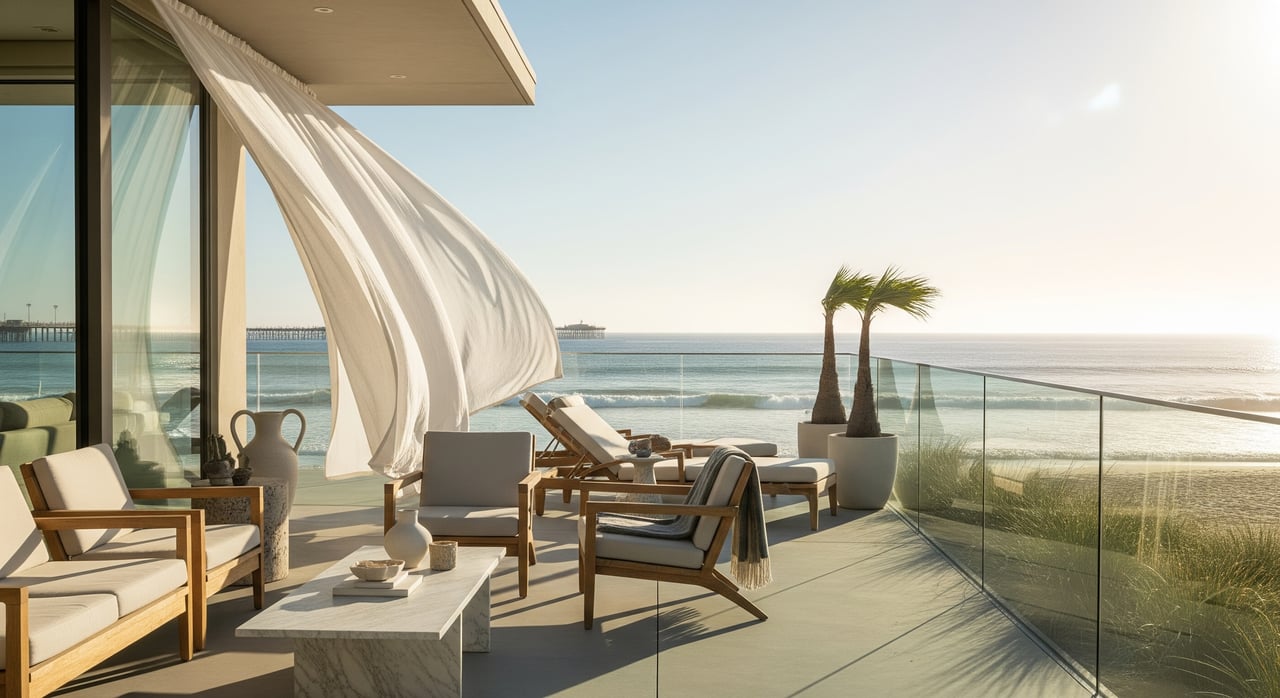
Ever notice how stepping just a few blocks inland in Hermosa Beach can feel warmer, calmer, and a little sunnier? That is the power of microclimates along the South Bay coast. If you are weighing the dream of oceanfront living against the comfort of a more sheltered yard, understanding wind, sun, and marine layer patterns will help you choose the right fit. In this guide, you will learn how distance from the sand, home orientation, and daily wind cycles shape everyday comfort, outdoor time, and upkeep. Let’s dive in.
Hermosa microclimate basics
Hermosa Beach sits low and narrow along Santa Monica Bay, so the ocean has a strong influence on daily weather. The region has a Mediterranean climate with mild temperatures year-round compared with inland Los Angeles. The biggest factors you will feel are the seasonal marine layer and the daytime sea breeze. Small changes in distance from the water and how a home faces the sun can make a noticeable difference in comfort.
Marine layer: cool, cloudy mornings
The marine layer is a shallow, cool layer of moist ocean air that often brings low clouds or fog to the coast. You will notice it most from late spring through early summer. Mornings can start cool and gray, then clear around midday or afternoon. Clearing times vary day to day, so morning sun on patios may be delayed, especially for east-facing spaces during these seasons.
Sea breeze and prevailing winds
As the land warms, a daytime onshore breeze builds from late morning into the afternoon. It is usually westerly to northwesterly and is strongest on and near the beach. Evenings and nights often calm down as the land cools. During periodic Santa Ana events in fall and winter, winds shift from the northeast and bring hot, dry air regionally, though the immediate shoreline can feel moderated by marine air.
Elevation and topography
Hermosa Beach is mostly flat with modest elevation changes, so distance from the ocean matters more than height. The biggest differences you will notice relate to exposure and shelter from buildings, trees, and fences. A single block can change wind and sun conditions in ways you will feel on decks and in yards.
Home orientation and urban form
How a home faces the sun and wind is a major comfort factor.
- West-facing rooms and decks get late-afternoon sun and ocean sunsets, with more wind and salt exposure.
- East-facing rooms enjoy morning sun when skies are clear but shift into afternoon shade.
- South-facing yards and windows receive the most consistent sun through the year, which helps in winter. North-facing receive the least.
- Corner lots, rooftop decks, and open beach frontage tend to feel windier. Buildings, fences, hedges, and trees can reduce wind and add privacy.
How distance from sand changes daily life
A few blocks in Hermosa can change the way you use outdoor spaces, your maintenance routine, and even your energy needs. Here is what to expect by location.
Oceanfront and the Strand
- Sun and views: You are here for direct ocean views and sunsets. West-facing light can be stunning in the evening.
- Wind and comfort: Expect breezier afternoons. Rooftop decks and exposed balconies feel the strongest onshore winds. Heavier outdoor furniture and wind screens help.
- Outdoor usability: Spaces are beautiful but can be wind-forward. South-facing nooks and courtyards can create warm sun pockets. Marine layer mornings are often cool and cloudy.
- Maintenance and durability: Salt spray is highest right on the beach. Metal, paint, and wood weather faster and need coastal-grade materials plus regular care.
- Noise and privacy: Beachfront living is active. You will see more foot traffic and public activity compared with inland streets.
- Energy: Many homes lean on ocean breezes to stay cool. West-facing glass may still need shading to control afternoon heat and glare.
Near-beach blocks: 1 to 4 blocks inland
- Sun and views: Ocean views are less common, but beach access is still a quick walk. Sun depends on lot orientation and neighboring structures.
- Wind and comfort: You will feel the sea breeze, though with less intensity than right on the Strand. Morning marine layer patterns are similar to the coast.
- Outdoor usability: More traditional yards and patios become practical for dining, play, and small gardens. South-facing courtyards shine in this zone.
- Maintenance: Salt exposure is moderate. Coastal-rated finishes are still smart, but upkeep can be less frequent than oceanfront.
- Lifestyle: A strong balance of beach convenience and residential privacy.
Inland blocks toward city edges
- Sun and views: Less ocean view, more consistent sun in yards and on patios. Afternoons can feel a touch warmer.
- Wind and comfort: The sea breeze reaches these blocks with reduced strength, so outdoor spaces are more consistently usable.
- Outdoor usability: Larger, sunnier yards are great for landscaping, entertaining, and pool plans. Solar potential improves with open southern exposure.
- Maintenance: Salt exposure drops with distance, though coastal conditions still call for corrosion-aware choices.
- Energy: Cooling needs can tick up slightly in summer compared with oceanfront, yet conditions remain mild relative to inland Los Angeles.
What to look for on property tours
You can learn a lot about a home’s microclimate in one day if you plan your visits with intention.
See the home at different times
- Morning: Check for marine-layer clouds, temperature, and light.
- Mid-afternoon: Experience peak sea breeze and any wind-driven coolness on decks and patios.
- Evening: Watch sunset angle, late-day glare, and neighborhood activity.
Observe wind and sun patterns
- Wind cues: Look at flags, trees, and light items for direction and strength. Head to the rooftop deck if there is one.
- Sun path: Walk the yard to track where sun lands and for how long. Note which patios receive morning sun vs afternoon shade.
- Humidity and odor: Feel for dampness on outdoor surfaces and check basements or garages if present.
Ask smart questions
- How often do mornings stay overcast, and when does it usually clear?
- Any history of salt-related corrosion or paint wear? Were coastal-grade materials used?
- Do existing windbreaks work on decks and balconies?
- Is landscaping planned for coastal conditions, with salt-tolerant species?
- How is HVAC sized, and are there any humidity or corrosion notes on mechanical systems?
Design and upkeep that make a difference
Small choices can deliver big comfort gains and lower long-term maintenance.
- Orientation and shading: Add adjustable awnings, louvers, or exterior shades on west-facing glass to soften afternoon heat and glare.
- Wind mitigation: Use living hedges, louvered screens, or tempered-glass wind panels to create sheltered zones. Choose heavier, fixed furniture on breezier decks.
- Material choices: Favor marine-grade fasteners, stainless hardware, high-quality coatings, composite decking, and rot-resistant wood alternatives.
- Landscaping: Select coastal and drought-tolerant plants, layer hedges as windbreaks, and use permeable surfaces for stormwater.
- Energy and comfort: Plan for cross-ventilation with operable windows and ceiling fans. Consider right-sized AC for rare heat waves and Santa Ana events.
- Routine care: Rinse salt from railings and hardware after storms and set a regular inspection schedule for exterior metals, paint, and sealants.
Insurance and permitting basics
Hermosa is a coastal city, so site-specific risk reviews are wise, especially close to the Strand.
- Flood and coastal hazards: For ocean-adjacent properties, review current flood maps and local sea-level planning materials.
- Wind and storm coverage: Policies vary on wind, salt exposure, and flood. Work with an insurance broker who understands South Bay coastal risks.
- Building and permitting: Coastal zones often have stricter rules for additions, rooftop decks, and setbacks. Confirm requirements with the City of Hermosa Beach before you plan improvements.
Which microclimate fits your lifestyle
- If your top priority is view and direct beach energy, oceanfront living delivers sunsets and sea air. Prepare for breezier afternoons and a higher-maintenance routine.
- If you want daily beach access with more usable outdoor space, look 1 to 4 blocks inland for a balance of shelter, privacy, and convenience.
- If your goal is a sunny yard, pool potential, and quieter afternoons, consider inland blocks where wind softens and outdoor living is more consistent.
Your ideal Hermosa Beach home comes down to how you want to spend your mornings, afternoons, and weekends. With clear priorities and the right guidance, you can align sun, wind, and lifestyle to the way you live.
Ready to match the right microclimate to your next move or prep your current home to shine for coastal buyers? Connect with Ryan Shaw for local guidance and white-glove execution, from smart orientation and staging choices to a process that maximizes outcomes. Request Your Home Valuation today.
FAQs
Is summer fog common in Hermosa Beach?
- Yes. The seasonal marine layer peaks in late spring and early summer, bringing cool, cloudy mornings that often clear by midday or afternoon.
Are Strand homes too windy for daily outdoor use?
- They are breezier than inland blocks, especially on rooftop decks in the afternoon. Wind screens, heavier furniture, and layout choices improve comfort.
Do you need air conditioning near the beach?
- Many homes rely on sea breezes most of the year. Some AC is useful for late-afternoon sun on west-facing rooms and during occasional Santa Ana heat events.
Does salt air increase maintenance near the ocean?
- Yes. Salt accelerates corrosion and weathering. Coastal-grade materials and routine rinsing and inspections help extend the life of finishes and hardware.
Are inland Hermosa yards better for pools and gardens?
- Often, yes. Inland blocks are warmer and more sheltered, with larger, sunnier yards that make pools, entertaining, and landscaping more practical.
How do Santa Ana winds affect Hermosa Beach living?
- During episodic fall and winter events, winds shift offshore and bring hot, dry air. Conditions vary by day, but immediate coastal areas can feel slightly moderated by marine air.